
Alternate level states: flood, freeze, flip
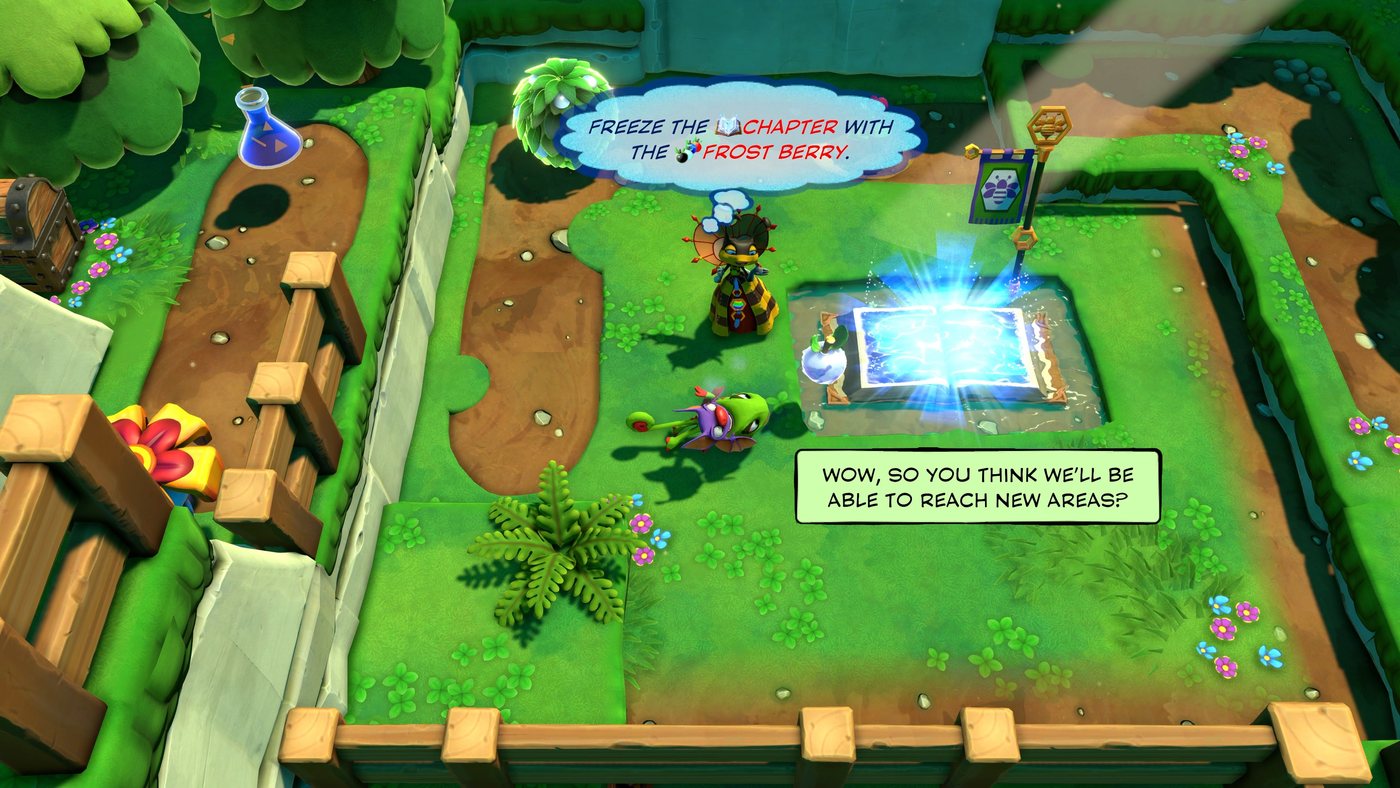
Flood, freeze or flip a level from its Overworld mechanism, then re-enter for a different layout and a fresh set of coins.
Alternate level states are the feature that separates Yooka-Laylee and the Impossible Lair from a straight 2.5D platformer. Playtonic's description is short: out in the Overworld, find ways to flood levels, freeze them or even flip them upside down to unlock alternative routes, layouts and even crazier surprises.
Three mechanics, one idea. A level you have already beaten is not finished, because the Overworld can hand you a different version of it.
The three states
| State | What the change is | Where the trigger lives |
|---|---|---|
| Flooded | Water is added to the level | An Overworld mechanism tied to that level |
| Frozen | The level is put into a frozen state | An Overworld mechanism tied to that level |
| Flipped | The level is turned upside down | An Overworld mechanism tied to that level |
The official wording covers the first two as flood and freeze, and the third explicitly as flip them upside down. It does not promise that every level has all three. What it does promise is that the altered version has different routes and a different layout, which is why a second visit is not a repeat.
Why bother with a state change
Three reasons, in order of how much they matter to a normal playthrough.
- Coins. The alternate layout exposes coin routes that the normal layout hides. Since coins are the only way through Trowzer's five paywalls, this is the practical reason most players use the mechanic at all.
- Routes. Some alternate versions offer a shorter or safer path to the level's end. If a normal layout has a hazard you keep failing, the flooded or flipped version may route around it.
- Secrets. Playtonic's phrasing, crazier surprises, is doing real work. The alternate states are where the game hides things that are not on the main path.
A fourth reason is completionism. The achievement list separates finding tonics from buying them, and some of the finding happens in altered layouts.
Finding the trigger
State changes are not a menu option. They are Overworld objects, and the game expects you to notice them.
- Look at the level gate first. The gate itself tells you the level name and its completion state, which is how you know a level is cleared.
- Sweep the area around the gate. Triggers sit in the Overworld, not inside the level, and they are usually part of the scenery rather than a floating icon.
- Check the area's own puzzles. The Overworld has objectives of its own, and several of them exist to hand you a state change.
- Watch for the change on the gate. Once the state is applied, the level entrance reflects it, and re-entering gives you the altered layout.
- Re-clear the level for coins, not for the bee. The bee is already yours, so the second run is a collection run.
Reading a flooded level
Water changes a level's geometry more than the other two states. The altered layout has its own routes, and how much water a given level takes is level-specific.
Treat a flooded run as a different level. The jump timing you learned on the dry version will not carry over, and the hazards that mattered before may not exist. Start slow, look for the new upper routes, and expect the coin clusters to sit where the water now reaches.
Reading a frozen level
Freezing changes surfaces and hazard behaviour. The frozen layout has its own coin routes, and the safest way to learn them is a slow first pass rather than a speed run.
The risk is overconfidence. Cold surfaces change how much control you have, and a coin cluster at the end of a long slide is not worth a death. Find where control changes before chasing the coins.
Reading a flipped level
Flipping is the strangest of the three and the one worth doing for its own sake. The level is turned over, so what was a ceiling becomes a floor and the camera has to re-teach you the layout.
Flipped levels are also where the game's level design is most visible. Rooms that looked like decoration on the normal pass turn out to be structured routes on the flipped one. Playing only one alternate state? Make it a flip.
Limits of a state change
They do not change the bee. One bee per level, already banked from the first clear. They do not change the level's place in the campaign, and they do not unlock new areas, because areas open through paywalls rather than through state changes.
They also do not reset your progress. Entering an alternate state is a choice you can undo by leaving and re-entering, so there is no cost to experimenting.
A practical order
Clear every level in an area normally first, then sweep the area for triggers, then re-run the altered versions for coins. Doing it in that order means your coin total is always moving toward the next paywall, and the paywall is always the thing that opens more levels.
Short of coins before a paywall? The fastest fix is usually a flooded or frozen run on a level you have already cleared. Cheaper than farming the Overworld, and it counts toward the coin ladder that runs to 200.
Next in the route
The levels overview covers the 48 level structure and the five areas. The Overworld guide covers where triggers sit relative to gates, the T.W.I.T. coin guide covers the coin economy, and the walkthrough puts the states into a route.
Sources
- Playtonic Games, "Yooka-Laylee and The Impossible Lair: Definitive Edition - Arrives December 15th", 24 November 2026 (flood, freeze, flip; alternative routes and layouts).
- Steam announcement for appid 846870, "Yooka-Laylee and The Impossible Lair: Definitive Edition - Out 15/12/26", 25 November 2026.
- Steam store page for appid 846870, checked 27 November 2026.